
Bridge Design
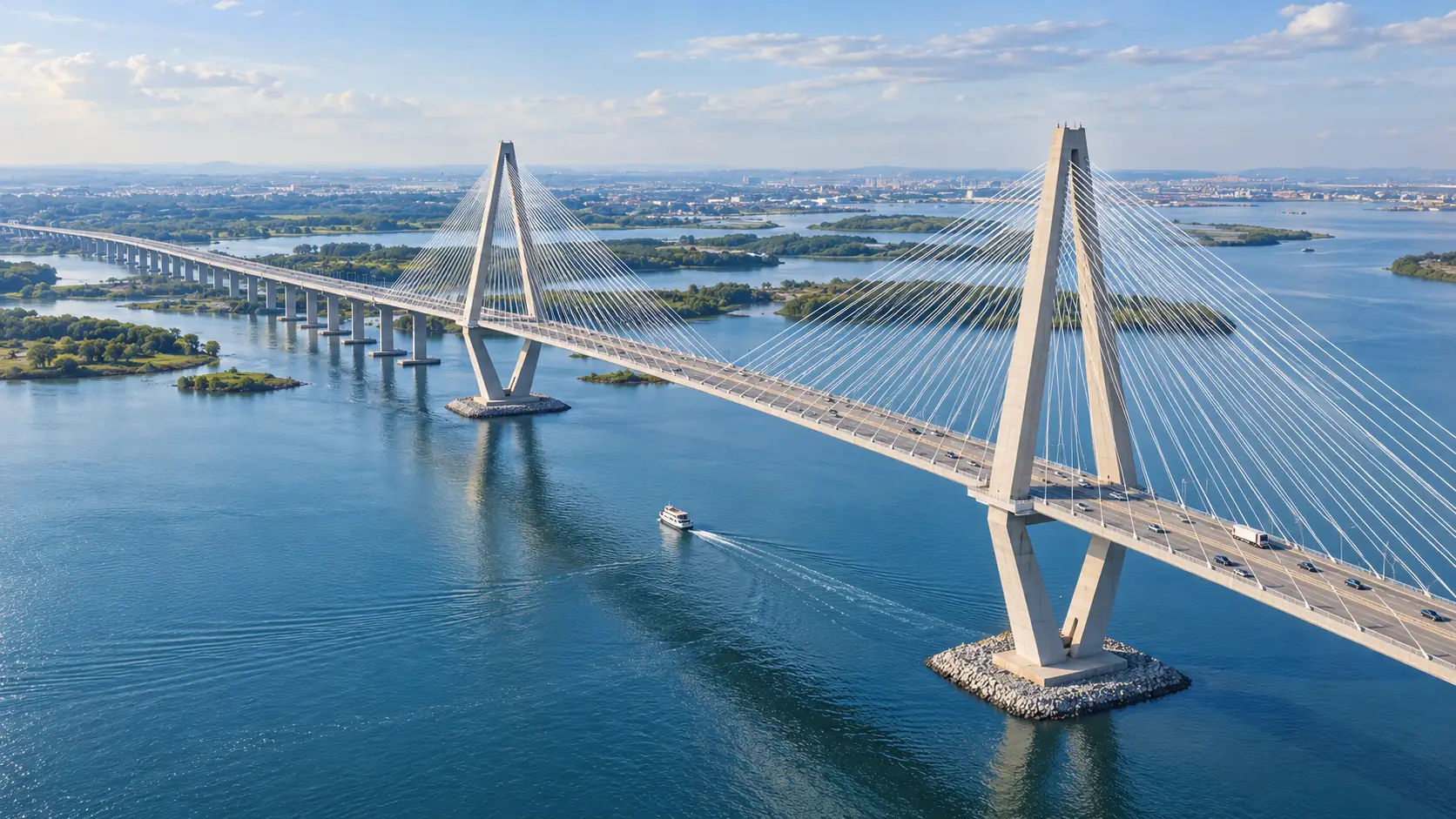
Bridge design services help municipalities, transportation authorities and developers create crossings suited to their location, intended use and long-term maintenance needs. Qualified bridge engineers develop structural solutions for roads, railways, pedestrians and cyclists, coordinating with geotechnical, hydraulic, environmental and transportation specialists. Services range from feasibility studies and concept selection to detailed design and construction support.
01
Site Investigations & Project Requirements
Engineers review the proposed crossing, approach roads, existing infrastructure, and surrounding land uses. Surveys establish ground elevations and waterway geometry, while geotechnical investigations provide information on foundation conditions. Project requirements define the users, traffic demands, clearances, and constraints the bridge must accommodate.
02
Bridge Type Selection & Preliminary Design
Concept studies compare suitable structural forms, span arrangements and construction materials. Engineers consider structural depth, foundation requirements, site access, environmental impacts and future maintenance. Preliminary cost estimates and construction schedules help owners evaluate alternatives and select a preferred solution.
03
Structural Analysis & Load Assessment
Calculations and computer models assess how the bridge responds to traffic, self-weight, temperature, wind and other relevant loads. The analysis establishes load paths and evaluates strength, stability, deflection and fatigue, where applicable. The level of analysis reflects the structure’s form, complexity and performance requirements.
04
Deck, Superstructure & Connection Design
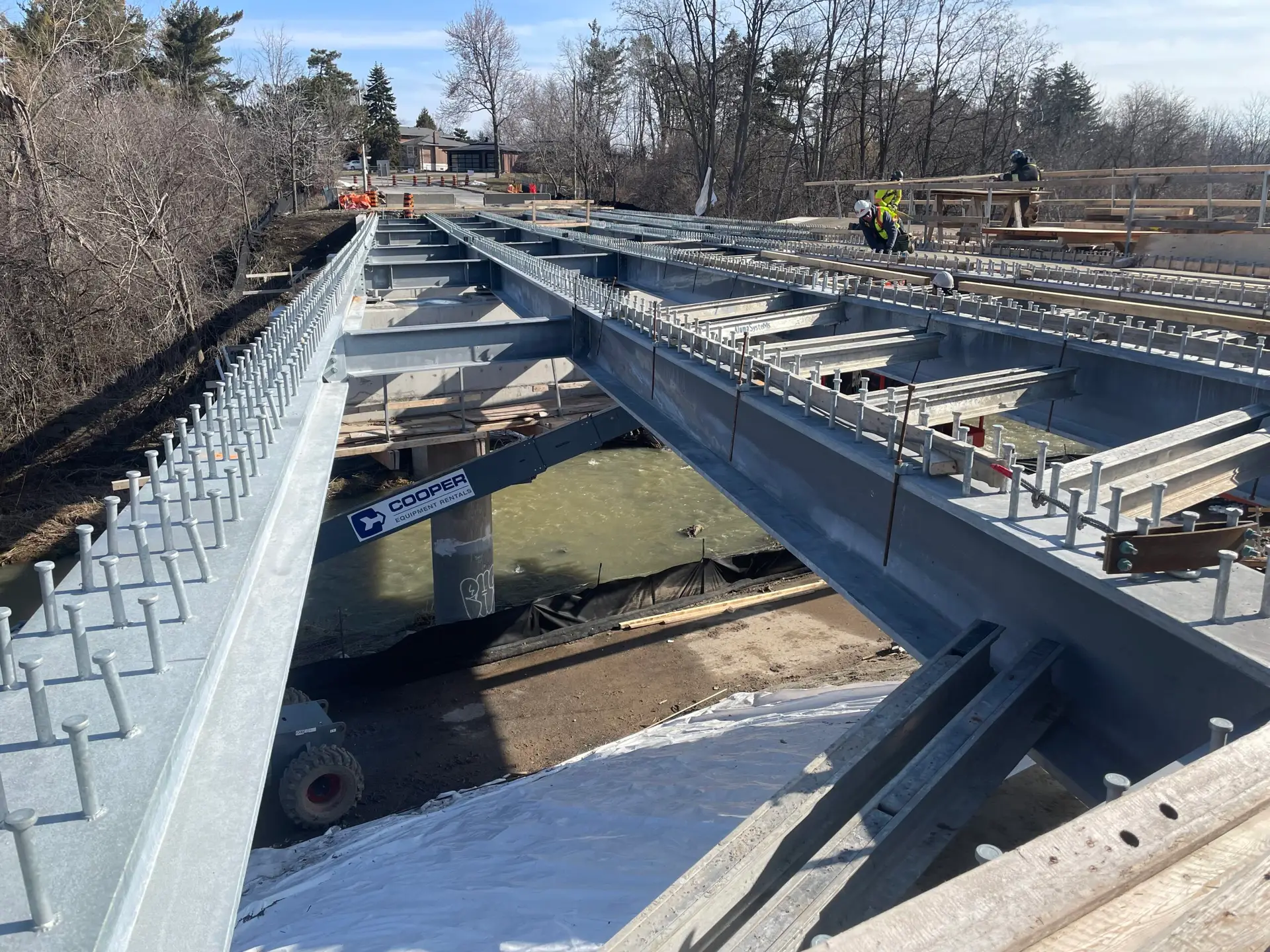
Detailed design establishes the deck, beams, girders, trusses, or other primary supporting elements. Engineers develop reinforcement, connections, diaphragms, and details to transfer forces between components. Design coordination also addresses barriers, sidewalks, cycling facilities, and utility supports, where included.
05
Foundations, Abutments & Piers
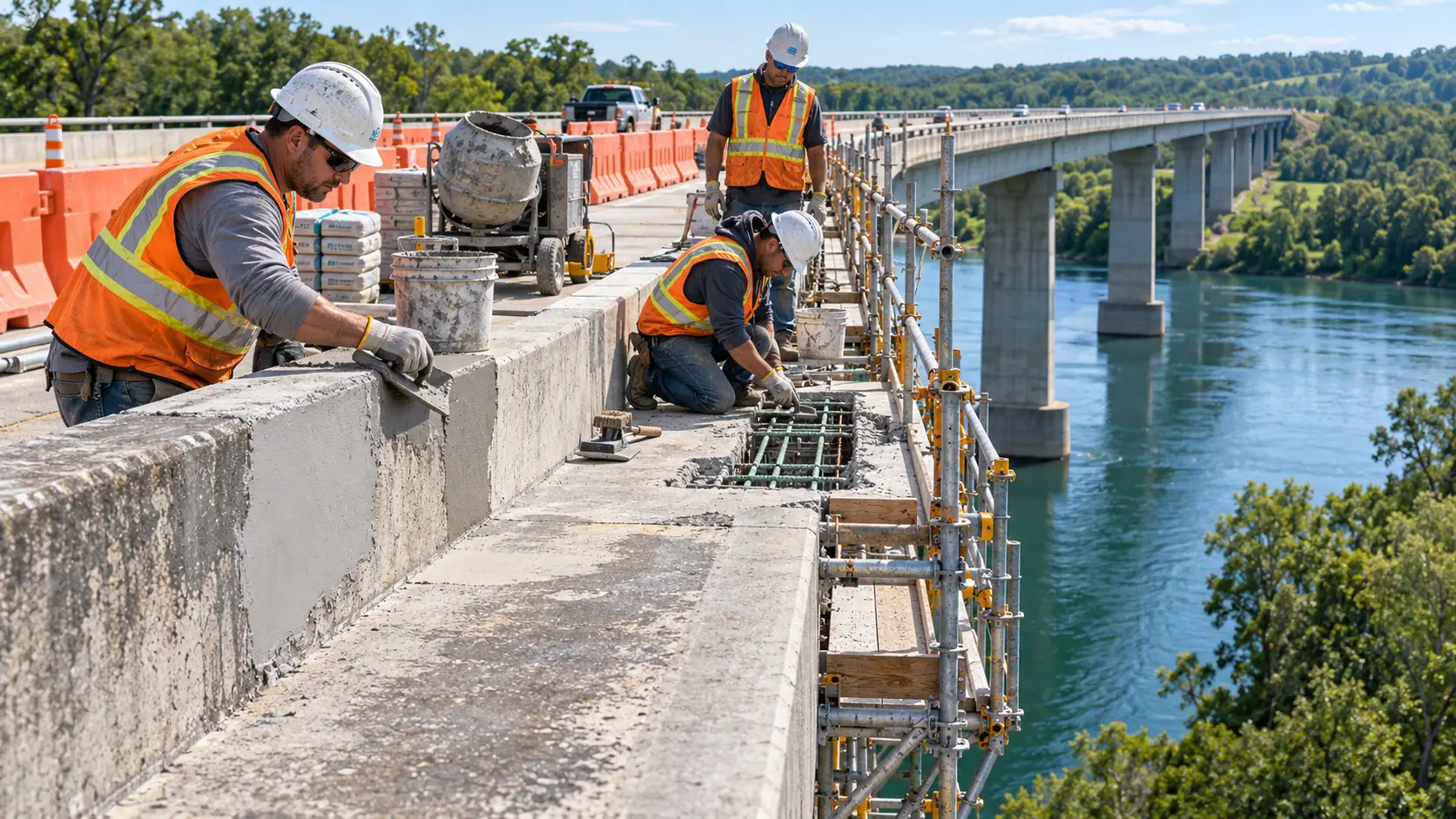
Engineers design foundations and supporting structures based on geotechnical investigation findings. Work considers bearing capacity, settlement, lateral loads, and interactions with the surrounding ground. Waterway crossings also require coordination of foundation levels and protection measures, with hydraulic and scour assessments.
06
Hydraulic Capacity & Waterway Coordination
For bridges over water, hydraulic specialists assess flow conditions, water levels and the effects of the proposed crossing. Findings inform span arrangements, opening sizes and erosion protection. Design coordination accounts for debris, ice and other site-specific conditions that may affect performance.
07
Durability & Maintenance Access
Engineers select materials and details suited to environmental exposure and the intended service life. Drainage, waterproofing, protective systems, joints, and bearings receive particular attention because they influence long-term deterioration. Access for inspection and component replacement is considered during design.
08
Construction Documents & Engineering Support
Deliverables include drawings, specifications, quantities, and cost estimates. Engineers support technical reviews, respond to tender questions, and coordinate with the owner’s project team. During construction, they can review submissions, respond to site questions, and assess proposed changes within their scope of work.